
- Jun 29
What Does Ready, Set, Go Mean? Understanding Wildfire Evacuation Levels
- Ruby Emery
There are a few days that are burned into my memory forever.
For me, one of those days was the Almeda Fire.
That morning, my husband and son left home to respond to another wildfire out of state. As they drove away, they saw smoke rising about a mile and a half from our house.
A few minutes later, my phone rang.
"Keep an eye on it," my son told me.
At first, it didn't seem like something that would become one of the most devastating fires our community had ever seen. Like so many people who live in fire country, we'd watched plenty of smoke columns over the years. Most never become the disaster you imagine.
But this one did.
Throughout the day, I kept checking for updates as our neighborhood went from Level 1 (Ready) to Level 2 (Set).
Even though I'm a fire wife and have spent years learning about wildfire behavior, seeing that Level 2 notification pop up on my phone felt completely different than I expected.
I knew what the words meant. What I didn't know was what would happen next.
Should I leave now?
Should I wait?
Should I call my husband while he was already responding to another fire?
A friend and I texted back and forth all day, asking each other those same questions. Neither of us wanted to leave too early, but neither of us wanted to wait too long.
So I started packing my car.
I helped my elderly neighbor get ready to evacuate with her five cats.
My daughter was at her dad's house across town. I kept thinking, I'll go get her, but it was her step-sister's birthday, and I didn't want to interrupt them.
Then it was too late.
The roads started closing, and entire parts of the valley became unreachable.
Her dad evacuated with his family and their two sheepdogs, but they couldn't find a hotel room anywhere nearby because every room was full. They ended up driving more than 65 miles before they finally found a place to stay.
My daughter was safe, but unreachable: Every road leading out of the valley was closed.
We were completely surrounded by fire.
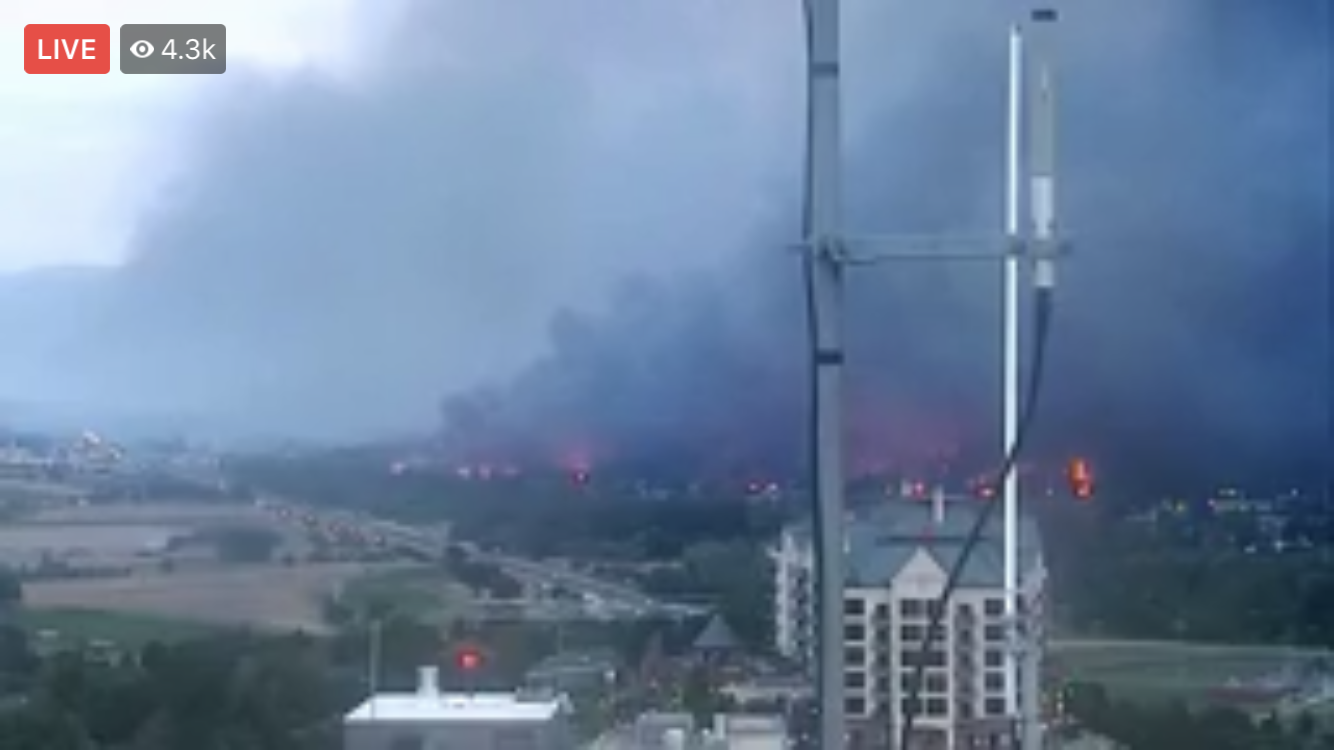
It was a Red Flag Warning day, and the wind was relentless. Flames and smoke raced through the valley.
But what I remember most?
It was losing connection.
I kept refreshing the evacuation maps until the internet became unreliable. Then it stopped working altogether.
Cell service became overloaded as thousands of people tried calling family and friends, and suddenly I couldn't rely on my phone to tell me if we had reached Level 3.
I remember digging through a drawer trying to find an old battery-powered radio so I could keep listening to local updates. Thankfully, our power stayed on. If it hadn't, I honestly don't know how I would have known it was time to leave.
It felt like the perfect storm. My husband and son were fighting another fire, my daughter had evacuated, roads were closing, communication was disappearing, and every hour seemed to bring another impossible decision.
As I sat there wondering what would happen next, thousands of other families across our valley were living through that same uncertainty.
By the end of the day, more than 2,600 homes had burned.
What still amazes me is where those homes were.
They weren't remote cabins hidden deep in the forest.
They were neighborhoods.
They were subdivisions.
They were homes in town—families who had every reason to believe a wildfire would never reach their front door.
That fire changed our valley forever. It also changed the way many of us think about wildfire preparedness.
Level 2 isn't scary because you don't know what it means. It's scary because you don't know what happens next.
Ready, Set, Go isn't just a color on a map or another notification on your phone. It's a system designed to give you time to make good decisions before a wildfire forces them for you.
If there's one thing I hope you take away from my experience, it's this:
Level 2 is not the time to start getting ready. It's the time to already be ready.
That's also why I created the Evac Ready checklists. I wanted families to have a simple plan they could put together long before they ever saw a Level 2 notification. Because when you're trying to decide whether it's time to leave, the last thing you should be doing is wondering what to pack.
So let's talk about what Ready, Set, Go actually means—and what you should do at each evacuation level so you can make confident decisions when every minute counts.
What Does Ready, Set, Go Mean?
If you've ever received a wildfire evacuation alert, you know how quickly your mind starts racing.
What does this mean?
Do I need to leave right now?
How much time do I have?
Those are exactly the questions the Ready, Set, Go evacuation system was designed to answer.
Instead of waiting until the last minute to tell people to leave, the system gives families time to prepare as conditions change. The goal is simple: help people make good decisions before a wildfire becomes an immediate emergency.
Before we talk about the different evacuation levels, there's one thing I recommend every family do today:
Sign up for your local emergency alert system.
Many counties use systems like CodeRED, Citizen Alert, Everbridge, or other emergency notification services to send evacuation notices directly to your phone. In many cases, these alerts are the fastest and most reliable way to learn that your neighborhood has moved to a new evacuation level.
If you're not sure what your county uses, take a few minutes to find out and register before you need it. It's one of the easiest steps you can take to protect yourself and your family.
It's also important to understand the difference between a Red Flag Warning and an evacuation notice, because the two are often confused.
A Red Flag Warning is a weather alert. It doesn't mean a wildfire is threatening your home. It means conditions—such as strong winds, low humidity, and dry vegetation—are favorable for a fire to start and spread quickly.
An evacuation notice is different. It's issued when there's an active wildfire that could threaten your area.
A simple way to think about it is this:
A Red Flag Warning tells you to pay closer attention.
An evacuation level tells you what action to take.
The Ready, Set, Go evacuation system has three levels:
Level 1 – Be Ready: There's potential danger in your area, and it's time to start preparing.
Level 2 – Be Set: Conditions have become more serious, and you should be ready to leave at a moment's notice.
Level 3 – Go Now!: Danger is current or imminent, and it's time to leave immediately.
Wildfires don't always move through these levels slowly or predictably.
Some fires give communities days to prepare. Others move so quickly that officials may move from Level 1 to Level 3 in a matter of hours—or skip a level altogether.
That's why it's important not to think of evacuation levels as a guarantee of how much time you have. They're simply the best information emergency officials have at that moment.
Understanding evacuation levels before wildfire season begins means you won't have to spend precious minutes wondering what you're supposed to do when that notification appears on your phone. You'll already have a plan instead of trying to make one during an emergency.
If you're not sure where to start, that's exactly why I created the Evac Ready Wildfire Evacuation Checklists. They walk you through what to do before wildfire season, what to pack in your go bag, and how to prepare your family before an evacuation notice ever arrives.
From Experience...
One of the biggest lessons I learned during the Almeda Fire was that waiting until you're worried is already too late to start preparing.
Sign up for your county's emergency alerts before fire season begins. Learn where your local evacuation information comes from. And when a Red Flag Warning is issued, take a few minutes to make sure your go bag is packed and your family knows the plan.
Those small steps don't take long, but they can make a huge difference when every minute counts.
What Is a Level 1 Evacuation? (Be Ready)
A Level 1 evacuation, also called "Be Ready," doesn't mean you need to leave immediately.
It means there's a potential danger in your area, and it's time to start paying attention.
In most cases, you may never have to evacuate. The fire could change direction, crews could get it under control, or conditions could improve. But if things get worse, you'll be glad you used this time wisely.
That's because Level 1 is your best opportunity to prepare without feeling rushed.
Here's what I recommend doing when your area moves to Level 1:
Monitor official updates. Check your county's emergency alerts, local emergency management, and trusted news sources regularly.
Pack your go bag. If it's already packed, take a few minutes to make sure everything is still there and up to date.
Gather important documents. Insurance information, passports, birth certificates, medications, pet records, and anything else that would be difficult to replace.
Fuel your vehicle. During wildfire season, I try to keep my gas tank at least half full. Long lines at gas stations are common when evacuations begin.
Charge your devices. Phones, portable chargers, flashlights, and rechargeable batteries are much easier to deal with now than later.
Prepare your pets and livestock. Make sure carriers, leashes, food, medications, and transportation plans are ready to go. Animals almost always take longer to load than we think they will.
Check on neighbors or family members. Elderly neighbors, people with mobility challenges, or anyone living alone may need extra time or assistance if an evacuation becomes necessary.
Preparing during a Level 1 evacuation doesn't mean you're overreacting. It simply means you're giving yourself options.
The goal isn't to panic; it's to make leaving easy if you need to.
If you don't already have a plan, this is exactly the stage where a checklist becomes invaluable. The Evac Ready Wildfire Evacuation Checklists were designed to help families work through these decisions before they're under pressure.
From Experience...
During the Almeda Fire, I remember thinking I still had time.
I packed my car, but I also kept wondering if I was overreacting.
I've never regretted preparing too early. But I've talked to plenty of people who wished they had started sooner.
Take Action
Take ten minutes today to make sure you're signed up for your county's emergency alerts.
Then check your wildfire go bag.
If it's already packed, great. If it isn't, start with the basics. You don't have to finish everything today—you just have to start.
Your future self will thank you.
What Is a Level 2 Evacuation? (Be Set)
If Level 1 is your warning, Level 2 is your wake-up call.
A Level 2 evacuation, also called "Be Set," means there's significant danger in your area, and you should be prepared to leave at a moment's notice.
This is the point where you stop wondering whether you should prepare and start acting as though you may need to leave at any time.
You may never receive a Level 3 evacuation notice.
Or you may receive one five minutes from now.
And that's the hard part—nobody knows.
That's what makes Level 2 the hardest evacuation level emotionally. You're living in the uncertainty of what happens next.
Here's what I recommend doing when your area moves to Level 2:
Load your vehicle. Your go bags, medications, important documents, pet supplies, and anything else you plan to take should already be in your vehicle or sitting by the door.
Think about the 5 Ps: People, Pets, Pills, Photos, and important Papers. If those are ready to go, you've already protected many of the things that matter most.
Keep your gas tank full. If you haven't fueled your vehicle yet, do it now. During fast-moving fires, gas stations can quickly become crowded or inaccessible.
Make sure everyone knows the plan. Talk with family members about where you'll go, how you'll communicate, and what you'll do if you're separated.
Watch conditions closely. Continue monitoring official alerts, but remember that internet and cell service aren't guaranteed. Have a backup way to receive information, such as a battery-powered radio (I have this one).
Consider leaving early. If you have young children, livestock, mobility challenges, medical needs, or simply feel uncomfortable waiting, it's okay to leave before a Level 3 evacuation is issued.
Every family has different circumstances, and sometimes leaving early is the safest decision you'll make.
If you're looking at that list and realizing you still have a lot to do, don't beat yourself up. This is exactly why I created the Evac Ready Wildfire Evacuation Checklists—to help families make these decisions before they're exhausted, scared, and watching wildfire evacuation maps.
From Experience...
During the Almeda Fire, our neighborhood reached Level 2.
I remember sitting in my house, wondering if we would eventually be told to leave or if the fire would change direction.
No one could answer that question, and that uncertainty was the hardest part.
Looking back, I've realized that Level 2 isn't scary because you don't know what it means.
It's scary because you don't know what happens next.
That's why I always tell people this:
If your gut tells you it's time to leave, leave.
There isn't a prize for waiting until the last possible minute.
Take Action
Walk through your home as if your neighborhood just moved to Level 2.
How long would it take to load your car?
Would everyone know where to go?
Would you have everything you need?
If the answer to any of those questions is "I'm not sure," don't wait for fire season to find out.
Spend a few minutes making a plan today, while you still have the time.
What Is a Level 3 Evacuation? (Go Now!)
A Level 3 evacuation, also called "Go Now!", means there's an immediate danger to your life.
This isn't the time to gather a few more things, water your roof, or wait for one more update.
It's time to leave.
If emergency officials issue a Level 3 evacuation for your area, leave immediately.
Grab the people, pets, and essential items you've already prepared, get in your vehicle, and go.
Follow directions from law enforcement and fire officials, even if it means taking a route you weren't expecting. Road closures can change quickly, and emergency crews may redirect traffic to keep people out of danger.
If your community has designated evacuation shelters or temporary evacuation points, head there if you don't have another safe destination. Checking in also helps emergency responders know you've made it out safely.
One of the hardest parts of a Level 3 evacuation is accepting that there isn't time to save everything.
That's what makes Levels 1 and 2 so important. They're your opportunity to prepare while you still have choices.
Level 3 is when you put that preparation into action.
If you've already packed your go bags, gathered your important documents, and talked through your evacuation plan with your family, you're not deciding what to do during a Level 3 evacuation.
You're simply doing what you've already decided.
From Experience...
Thankfully, my neighborhood never reached Level 3 during the Almeda Fire.
But thousands of families in nearby communities did.
Many had only minutes to leave.
Some never had the chance to go back.
That's exactly why I believe so strongly in preparing before you ever receive a Level 3 evacuation notice.
When it's time to go, you shouldn't be deciding what to pack.
You should already be on your way.
Take Action
Ask yourself one question:
If your phone alerted you to a Level 3 evacuation right now, could you be driving away in 10 minutes?
If the answer is no, don't feel discouraged.
Just choose one thing you can do today to get a little closer.
That's exactly why I created the Evac Ready Wildfire Evacuation Checklists. You don't have to prepare for everything at once. You just have to start before you need to.
Preparation doesn't happen all at once.
It happens one small step at a time.
The Best Time to Prepare Is Before You Need To
The Almeda Fire changed the way I think about wildfire preparedness.
Before that day, I thought being prepared meant having a few supplies tucked away in a closet. Now I know it's so much more than that.
Being prepared means understanding evacuation levels before your phone starts buzzing with alerts. It means knowing where you'll go before the roads start closing, having a plan with your family before cell service becomes unreliable, and packing your go bag before you're standing in the driveway wondering what to take.
I truly hope you never need any of this information.
I hope you never experience the uncertainty of watching an evacuation map and wondering if your neighborhood will be next. I hope you never have to search for a hotel while thousands of other families are doing the same thing. And I hope you never know what it's like to wonder how you'll receive a Level 3 evacuation notice because your internet stopped working.
But if you live in wildfire country, hope isn't a plan.
Fortunately, you don't have to do everything today. Preparedness isn't about checking every box in one weekend. It's about taking one small step, then another, until you have a plan that gives you confidence instead of anxiety.
Maybe today that means signing up for your county's emergency alerts. This weekend, it might mean putting together your first wildfire evacuation go bag or talking with your family about where you'll meet if you're ever separated.
Every small step you take now is one less decision you'll have to make during an emergency.
That's exactly why I created the Evac Ready Wildfire Evacuation Checklists.
After living through the Almeda Fire, I wanted to create something that would make preparing feel less overwhelming. The checklists and planning pages are designed to help you think through the small details before you're under pressure, so when an evacuation notice comes, you're not starting from scratch.
My goal was never to create more fear.
It was to help families feel calmer, more organized, and more confident when everything around them feels uncertain.
Because when your phone buzzes with an evacuation alert, I don't want your first thought to be:
"What do I do now?"
I want it to be:
"I've got this."
Common Questions About Wildfire Evacuation Levels
Can a wildfire skip directly to Level 3?
Yes.
Wildfires don't always move through Level 1, then Level 2, then Level 3 in a predictable order. If fire behavior changes rapidly or lives are immediately at risk, emergency officials may move directly to a higher evacuation level.
That's one of the biggest reasons it's so important to prepare before an evacuation notice is ever issued.
Should I leave during a Level 2 evacuation?
That depends on your situation.
If you have young children, elderly family members, pets, livestock, medical needs, or simply feel uncomfortable waiting, leaving during Level 2 is often a smart decision.
You don't have to wait for a Level 3 notice if leaving earlier feels safer.
Who decides evacuation levels?
Evacuation levels are typically determined by local emergency management officials and law enforcement in coordination with fire agencies. They evaluate fire behavior, weather conditions, road access, and public safety before issuing evacuation notices.
Where should I get evacuation updates?
Always rely on official sources.
That may include your county's emergency alert system, local emergency management office, sheriff's office, emergency management social media pages, local news stations, and emergency radio broadcasts.
Don't depend on a single source of information.
During the Almeda Fire, internet service became unreliable and cell networks became overloaded. Having multiple ways to receive updates isn't just helpful—it can become essential.
What's the difference between a Red Flag Warning and an evacuation notice?
A Red Flag Warning is a weather alert.
An evacuation notice is an emergency action.
A Red Flag Warning means weather conditions are favorable for extreme fire behavior if a fire starts. An evacuation notice means there's an active wildfire that could threaten your area and tells you what action to take.
What if I don't have time to pack?
That's exactly why emergency officials use the Ready, Set, Go evacuation system.
Level 1 and Level 2 exist to give you time to prepare before a situation becomes critical.
If you're waiting until a Level 3 evacuation notice to start packing, you've waited too long.
That's also why I created the Evac Ready Wildfire Evacuation Checklists—to help families make these decisions before they're under pressure.
What if I have pets?
Include your pets in your evacuation plan long before wildfire season begins.
Have carriers, leashes, food, medications, vaccination records, and identification ready to go. Animals become stressed during emergencies, and having everything prepared ahead of time can make evacuating much smoother.
And if you have cats, trust me on this one: get them into their carriers early.
What if the power or internet goes out?
Don't assume your phone will always work.
Keep a battery-powered radio, a portable phone charger, and more than one way to receive emergency information.
One of the biggest lessons I learned during the Almeda Fire was how quickly reliable communication can disappear. Having a backup plan isn't just helpful—it can be essential.